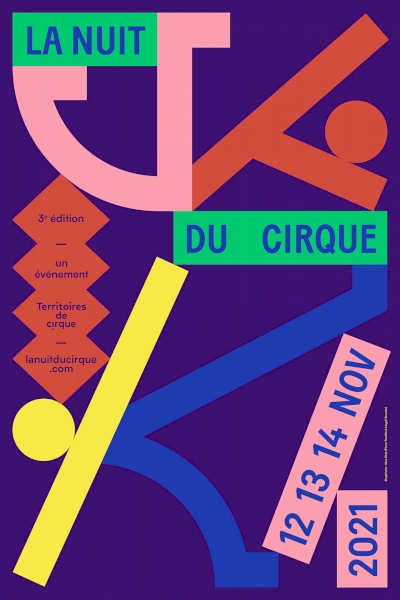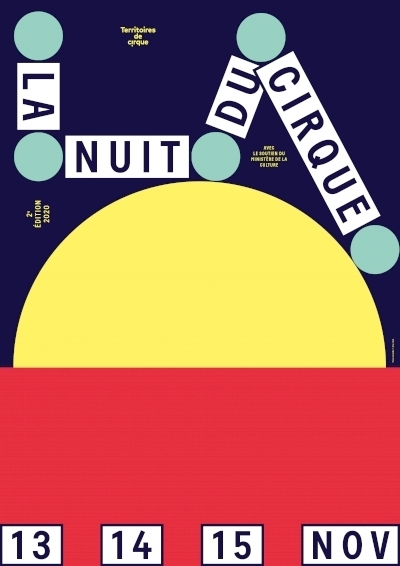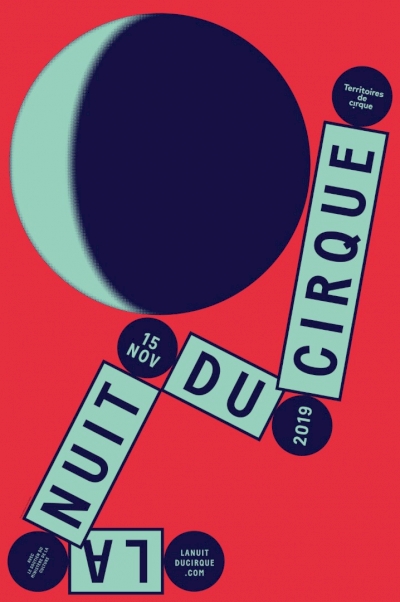
The event
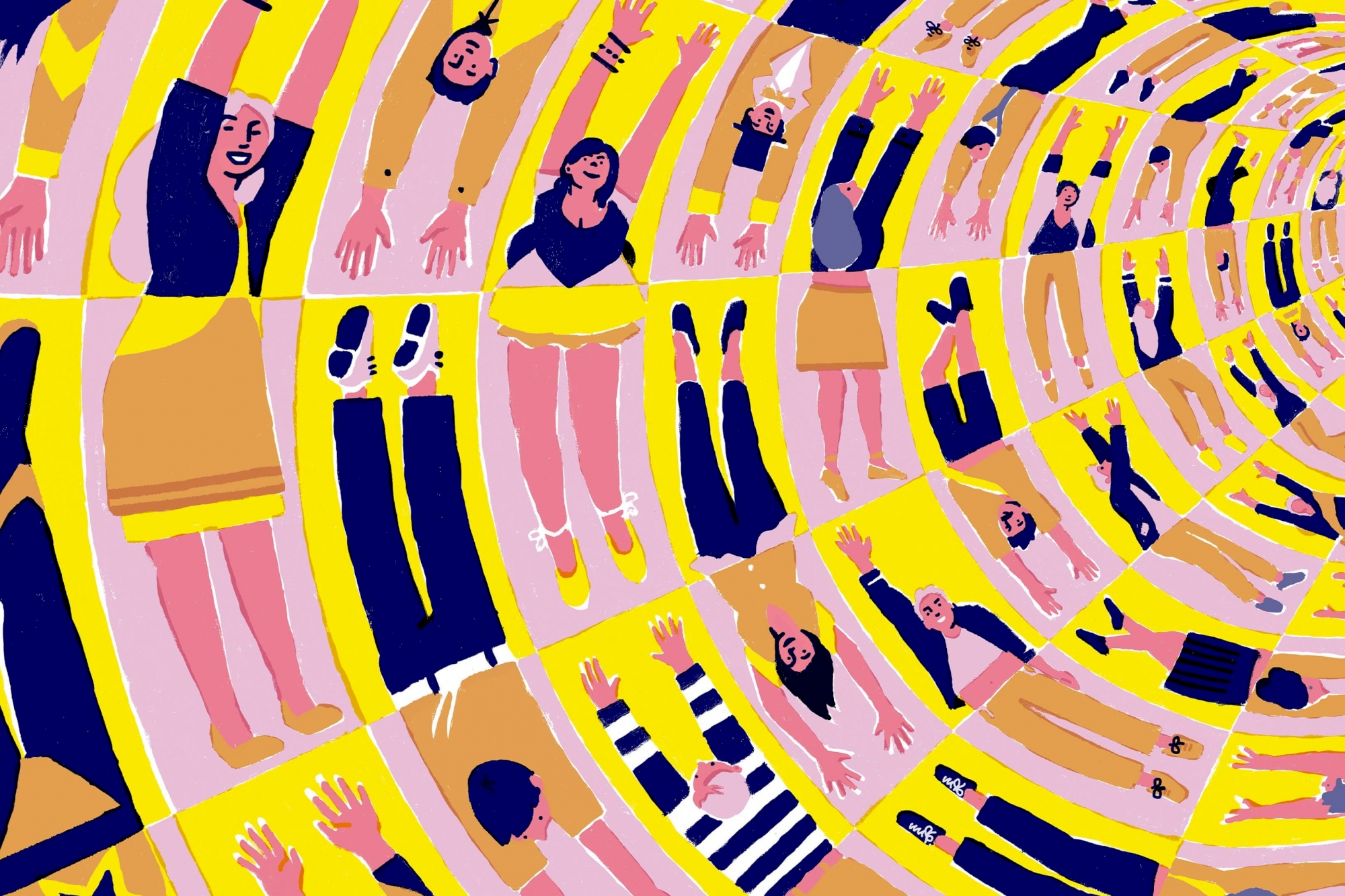
LA NUIT DU CIRQUE
A BREATH OF FREEDOM, SHARED ENERGY
There is something irresistible about the circus.
A call. A force of attraction that transcends forms, aesthetics and territories. It draws bodies and gazes, artists and audiences, the daring and the curious.
Round and bare stages. Big tops, theatre stages, village halls or unusual venues, in the heart of cities or in the open countryside. Bodies that fly, that search, that doubt, that overturn. Intimate writing, shows that overflow with risk, grace and resistance.
Contemporary circus is not a genre. It is a movement. A constellation of gestures, artists, venues, companies, schools and audiences, each shining their own light, each orbiting around the same desire: to make art a living, popular and demanding space, sensitive and political.
La Nuit du Cirque is the moment when this constellation bursts into life.
Across France and in fourteen countries. Thousands of gestures converge, gravitate and light up together.
An irresistible attraction.
Be part of the movement!
La Nuit du Cirque is an international event to promote contemporary circus, initiated and organized by Territoires de Cirque with the support of the French Ministry of Culture, in collaboration with the Institut français and assistance from Circostrada, the FFEC - French Federation of Circus Schools, the FEDEC - European Federation of Professional Circus Schools, the Grand CIEL network, ProCirque (Switzerland), BUZZ and Forum Neuer Zirkus (Germany), Circuscentrum (Belgium), the Czech Association of Contemporary Circus (Czech Republic), CircoRED - Federación Estatal de Profesionales de Circo (Spain), Circus & Dance Finland and Clowns Sans Frontières France (CSF).
Interview with
Delphine Poueymidanet, General Secretary of Territoires de Cirque
and Gaëlle Lecareux, Director of the Théâtre ONYX, a nationally accredited theatre in Saint-Herblain in western France, and Vice President of Territoires de Cirque
Each La Nuit du Cirque is more intense and profound than the last. In the midst of the crisis currently impacting the circus, as is the case for the entire performing arts sector and public services, the circus arts offer precious spaces for resistance, a theme echoed in the 8th edition of this event organised by the Territoires de Cirque (TDC) organisation. Rather than through force, performance, or even overtly political productions, it is often through the assertion of vulnerability that the circus’s struggle against the current troubling state of affairs manifests during this edition of La Nuit du Cirque. In a spirit of ever-stronger cooperation, the imagination also unfolds this year as a refusal to give in to discouragement.
Despite an already difficult context – in large part due to budget cuts – the previous Nuit du Cirque (NDC) kept up the spectacular growth the event has generated since its launch in 2019. What do you think accounts for this remarkable success, a success running against the tides of the times?
Delphine Poueymidanet: Last year at TDC we were quite worried when we issued a call for participation in La Nuit du Cirque, but the event exceeded our expectations. With 368 different artistic performances across the area, and more than 75 000 spectators, as well as 19 performing countries, more than ever the NDC has established itself as a major event in an artistic field whose appeal far exceeds this event alone, an event we organise with the support of the Ministry of Culture as well as other national and international partners.
Gaëlle Lecareux: The circus is indeed hugely popular with audiences. I attribute this in part to the fact that this is an art form that takes us back to a more festive style, following a trend that favoured more reflective and documentary-style productions. And this without sacrificing artistic rigor. The formidable effort made by circus arts professionals to maintain a diversity of formats and aesthetics despite the present context plays a major role in the public’s enduring fascination with this discipline. The NDC proves that artists are far from uniformly moving toward more a minimalist style of performance. I sense that within the circus community there is a profound awareness of the need to maintain formal ambition and to continue to create large-scale productions – particularly big-top shows, which serve as models of cultural democracy.
This year even more than previous years, partnerships bloomed across several regions. This commendable practice explains the NDC’s ability to expand its reach throughout the country.
D.P.: From the very beginning, various venues, such as Le Plongeoir, national circus centre in Le Mans, the Théâtre ONYX in Saint-Herblain, of which Gaëlle is the director, and La Cascade, national circus centre in Bourg-Saint-Andéol sparked a strong editorial lead to shape La Nuit du Cirque, turning it into an opportunity to invent unique ways for artists and audiences to connect. And since last year, there has been a noticeable increase in cooperation among organisations within given regions, which has taken editorializing to a whole new level. For example, this phenomenon can be found in Ille-et-Vilaine with Ay-Roop, the regional circus arts stage based in Rennes, in the Lyon metropolitan area with the national circus centre UTOPISTES – Cité internationale des arts du cirque, and in Toulouse with La Grainerie – Fabrique des arts du cirque, Le Lido - municipal centre for the circus arts and the Ésacto Lido – École Supérieure des Arts du Cirque. These networks of venues – none of which are solely dedicated to the circus – allow those that are facing challenges to bounce back. The local tours some of them organise ensure artistic continuity, multiplying opportunities for audiences to experience a single production or a company’s broader repertoire. They also deal with larger economic and ecological imperatives, to which the industry is focusing a great deal of attention. This is all the more significant given that the increased frequency of heatwave events is particularly harsh on artists whose work involves intense physical exertion.
G.L.: This spirit of collaboration in response to the situation is tremendous. Another response comes from the artists themselves, with what appears to me to be a return to the circus’s DNA: a very close, very immediate connection with the audience.
New Magic and Clowning are among the star disciplines this year at the NDC. Is this another sign that the circus is turning back to its roots?
D.P.: Clowning and New Magic do appear to be succeeding autobiographical productions and circus cabarets, which we saw grow significantly in the NDC’s programming in recent years. For example, in Châlons-en-Champagne, the Palc – national circus centre, the CNAC - Centre National des Arts du Cirque, La Comète – national stage, and the Châlons-en-Champagne museums network are joining forces, as they do every year, to organise a “Magic Night”. Among the many the clown shows in the programme, examples include Aux innocents les mains pleines by the Et vous en vivez ? company at the Renaissance in Mondeville and Clown à l’état brut by Rui Paixão at the SUBS in Lyon. A “Catastrophe Night” will also be held at the Théâtre de la Bertoche in Le Mans, featuring public workshops and performances by the Openclown circus school. On the occasion of this event, TDC is also formalising a partnership with Clowns sans Frontières France, a connection which has, in fact, existed unofficially for a long time: artists, companies, and paths have long intersected in the fields of artistic creation and solidarity and a good number of our organisations have already worked with this international solidarity arts association. We share in the conviction that art is not a luxury, it is a human necessity and an essential resource, especially for the most vulnerable. It seems to me that the resurgence of the clown goes hand in hand with the expression of a sense of dissonance.
G.L.: The clown’s presence and language are indeed very distinctive. They can be outrageous and trashy. They also offer fierce resistance to the spirit of the times. While this art form, along with magic, is no longer practiced in its traditional form but instead is being continuously reinvented, it also still embodies the desire to create new, more resilient, worlds. As we are in the midst of catastrophe, circus artists have traded their cautionary message for a different kind of approach, one that seeks to foster collective well-being and care. The current crises are taking a toll on our bodies and the circus is a space where we can practice a collective rejection of violence and alienation.
Rather than through strength and performance, it is through vulnerability that this refusal on the part of the companies is most often expressed.
D.P.: Through the scope and diversity of its programming, which each organisation puts together with complete freedom, the NDC helps bring this kind of trend to the forefront. It’s fascinating! In many of the shows on offer, vulnerability is considered a kind of new strength. I’m thinking of Pauline Dau, whose show Santa, ce qu’il me reste de la Corse will be put on at the Antichambre in Mordelles as part of the NDC and coordinated by Ay-Roop. The show tells the story of a forty-year-old woman who questions the place of women in a society that continues to be largely dominated by men. By speaking about her body as a circus performer and her profession, she challenges that society’s preconceived notions. Témoignage de la Chimère, by the Charge Maximale de Rupture company, explores the boundary between attachment and belonging and reveals that coexistence can only happen when we accept imperfection. The show will be performed at the Théâtre Mansart, in Dijon. In the show Seuil by the Compagnie Inéluctable, presented by 13ème Sens in Obernai, bodies weave together a vocabulary of relationship – holding, letting go, supporting, getting back up – with a connection to those who are absent yet continue to be with us. And the Mondiale Générale, whose show En liesse will be put on at Le Milieu in Rennes, elevates joy to a vital necessity. In a world in crisis, this is an act of resistance. Gender and the assertion of strong, unique identities are also at the heart of the Queer Circus, whose collective production Le Premier artifice will be presented in the context of the NDC at the Parc des Chantiers in Nantes.
G.L.: Rather than revolutionary, these forms of resistance are rooted in a broader movement. This is the case of the company SPPI – Société Protectrice des Petites Idées, to whom I am handing over the reins of my Nuit at ONYX this year. By hosting several performances by this offbeat traveling circus troupe whose artistry plays at the border between dance and street performance, and by inviting them to curate other artists, I wanted to share with everyone in attendance the reality of a circus in full transformation. I really love the biting humour and the very direct engagement with audience members that SPPI utilises to denounce capitalism’s excesses.
In 2023, TDC launched a production fund, a cooperative initiative to support the circus arts. Does this event showcase the results of that initiative?
D.P.: Absolutely. Since the launch of the fund, which contains “large-scale” and “small-scale” categories, the selected shows have for the mostly been staged as part of the NDC, which demonstrates the programme’s consistency and usefulness. TRAXXx, by CirkVOST, the “large scale” winner in 2025, will be put on this year at the Parc des expositions in Alès. In 2025, TDC also launched, at the initiative of the national circus centres, “Les Grands Plateaux du Cirque” programme to address the current challenges in producing large-scale circus shows intended for general audiences in large theatres. The SCoM – Coline Garcia company won the award with the show Hyperboles, which is set to premiere in January 2027. It is all this work carried out throughout the year that contributes to the scale of the Night, whose international scope also keeps growing. In 2026, all the countries that participated last year will once again be present for this Nuit’s adventure; they will be joined by Scotland, Italy, and Spain, as we speak, where the CircoRED network will coordinate an event on a national scale similar to TDC’s in France, along with companies from other countries such as Germany, Belgium, Switzerland, the Czech Republic, and Finland.
To see that our coordination model, in large part thanks to its flexibility and light touch, can be developed elsewhere in similar ways but with local specifics is highly stimulating for us. The Nuit du Cirque has created true cooperation between countries. Like the circus, it is ever moving, and never ceases to surprise and defy expectations.
Interview: Anaïs Heluin
Delphine Poueymidanet
Secretary General of Territoires de Cirque
Editorial director and coordinator of La Nuit du Cirque
Assisted by
Tania Reyes
Illustration
Dugudus — dugudus.fr
Graphic Design
Théo Scheid — theoscheid.com
Website (design and code)
Adrien Goua — adriengoua.com
Salomé Macquet — salomemacquet.com
National media relations
bureau nomade
Carine Mangou et Estelle Laurentin
→ bureau@bureau-nomade.fr
Social media
Coralie Weben
Translation of the interview
Elisabeth Buchet-Deák
Journalist
Anaïs Héluin